Social Icons

Showing posts with label Paedodontic. Show all posts

Thursday, February 14, 2013

Six Techniques for Managing Behaviour in Pediatric Dentistry

Voice control

Voice control is a controlled alteration of voice volume, tone, or pace to influence and direct the patient's behaviour.

Objectives:
(i) To gain the patient's attention and compliance.
(ii) To avert negative or avoidance behaviour.
(iii) To establish appropriate adult-child roles.

Indications: May be used with any patient.

Contraindications: None.

Tuesday, February 12, 2013

Thumb Sucking: How to Help Your Child Stop the Habit

Children suck their thumbs for a variety of reasons. For infants, it is a natural reflex that often begins in the womb. As babies grow, they learn a lot about their bodies and the world around them through sucking. They suck on their fingers, clothing, and toys. From this action they learn what is pleasing and what is uncomfortable. Sucking on an ice cube or cool teething ring feels good when those first teeth are trying to break through, but when the same teething child sucks on a hard plastic toy, she may experience discomfort.

Early Childhood Caries (Baby Bottle Tooth Decay)

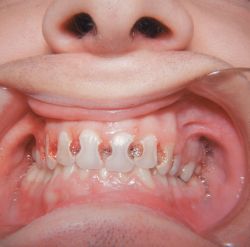
Early childhood caries, also known as baby bottle caries, baby bottle tooth decay, and bottle rot, is a syndrome characterized by severe decay in the teeth of infants or young children. Early childhood caries (ECC) is a very common bacterial infection. Its prevalence is epidemic; in the US its rate is highest in minority and rural populations, at times infecting over 70% of the children. A large body of scientific evidence indicates that ECC is an infectious and transmissible disease, with Streptococcus mutans the primary microbiological agent in the disease. The disease process begins with the transmission of the bacteria to the child, usually from the primary caretaker. Caretakers with untreated dental disease present a very high risk to their children.